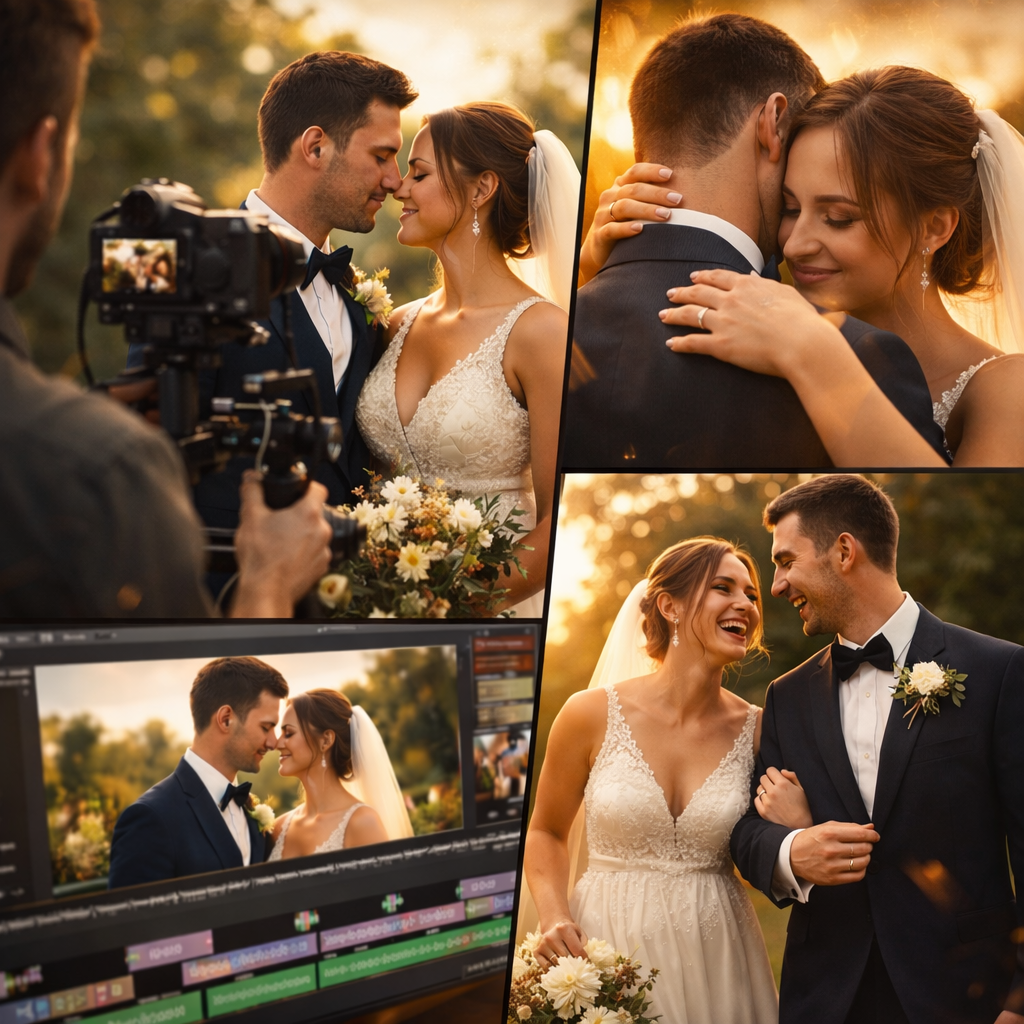
Capturing emotion in wedding films means prioritising story over footage. A wedding film captures emotion when the editor structures raw clips around the emotional arc of the day — anticipation, vulnerability, joy — rather than chronological order. Professional wedding videographers achieve this through intentional pacing, music that mirrors the couple's energy, and selective use of candid moments that reveal genuine feeling. The result is a film viewers feel, not just watch.
Wedding videography isn’t just about documenting an event — it’s about telling a story that moves people. The best wedding films don’t rely on expensive gear alone; they use storytelling, pacing, and emotion to turn real moments into cinematic memories.
Below are the key creative techniques that help transform your footage into powerful emotional storytelling.
1. Begin with the Story, Not the Timeline
Every wedding has its own rhythm. Before you press record, understand the couple’s dynamic — how they met, what moments matter to them, and what tone they want their film to convey.
Ask questions before the shoot:
- How do they want their day to feel on film — romantic, fun, cinematic, documentary?
- What moments do they value most — vows, speeches, or candid laughter?
This foundation will guide your shooting style, editing choices, and soundtrack selection.
2. Focus on Genuine Reactions
Authentic emotion lives in small, fleeting gestures — a nervous glance before the ceremony, tears during vows, laughter between friends. These unscripted details tell more than any planned shot list.
To capture them:
- Stay alert and use a telephoto lens during intimate moments.
- Anticipate key emotions — follow the parents during the first dance or the bridal party during speeches.
- Avoid interrupting natural interactions; blend into the background.
The goal is to observe, not direct.
3. Use Music to Shape Emotion
Music sets the heartbeat of your story. Choose soundtracks that match the couple’s energy — not just generic cinematic scores.
- For romantic tones: try slow piano or acoustic tracks.
- For lively celebrations: upbeat indie or cinematic pop.
- For emotional depth: instrumental builds that rise with the visuals.
Always sync your cuts to the rhythm, allowing visuals and sound to move together.
4. Play with Pacing and Transitions
Emotion in editing often comes from contrast. Combine fast-paced moments (preparation, party scenes) with slower, more intimate sequences (vows, portraits).
Use transitions that feel invisible — crossfades, sound bridges, or match cuts that connect two emotional beats seamlessly.
The audience should feel the passage of time naturally, not notice the edits.
5. Capture Ambient Sound and Voice
Voiceovers and real sound create authenticity. Record snippets like laughter, footsteps, clinking glasses, or whispered vows.
Layer them beneath music for texture and presence.
If the couple reads personal vows or letters, record them separately for clean audio and use them as a narrative spine throughout the edit.
Great wedding films are built on empathy, not just editing. As a videographer, your role is to feel before you frame — to sense the atmosphere, anticipate emotion, and translate it into story.When done right, your work won’t just remind couples of their wedding day — it will make them feel it again.
Frequently Asked Questions
How do you capture emotion in a wedding film?
Emotion in a wedding film is captured through story-driven editing: structuring clips around emotional peaks (vows, first look, speeches) rather than chronology, choosing music that mirrors the couple's mood, and using candid moments rather than posed footage. Pacing — slowing down during quiet moments and building energy during celebrations — amplifies the emotional impact without artificial effects.
What storytelling techniques do wedding videographers use?
Professional wedding videographers use three core storytelling techniques: (1) narrative arc — opening with anticipation, building through ceremony, releasing during reception; (2) audio-led editing — letting vows, speeches, and ambient sound drive the cut points; and (3) emotional contrast — pairing a quiet intimate moment directly before a high-energy celebration to maximise feeling.
Why do some wedding films feel emotional while others don't?
The difference is editorial intention. Films that feel emotionally flat typically cut every clip chronologically and rely on music alone. Emotionally resonant films are built around moments of genuine feeling — a nervous laugh before vows, a parent's reaction, a whispered exchange — and the editor deliberately places these at the film's emotional turning points.
How long should a cinematic wedding film be to stay emotional?
A cinematic highlight film of 5–8 minutes sustains emotional engagement most effectively. Longer full films (30–90 min) require strong chapter structure to maintain feeling throughout. Films under 3 minutes often sacrifice emotional depth for shareability — best reserved for social media teasers rather than the primary deliverable.
Can outsourcing wedding video editing preserve the emotional storytelling?
Yes — when the brief is clear. A professional outsourced editor needs three things to replicate your emotional style: a reference film that reflects your pacing and tone, a shot list marking the must-use emotional moments, and music direction. With these, an experienced wedding video editor can deliver storytelling indistinguishable from an in-house edit.
Need an editor who understands emotional storytelling?
At FrameFlow Edit, every wedding film is built around the emotional arc of the day — not just the timeline. See how we edit wedding films for videographers worldwide →